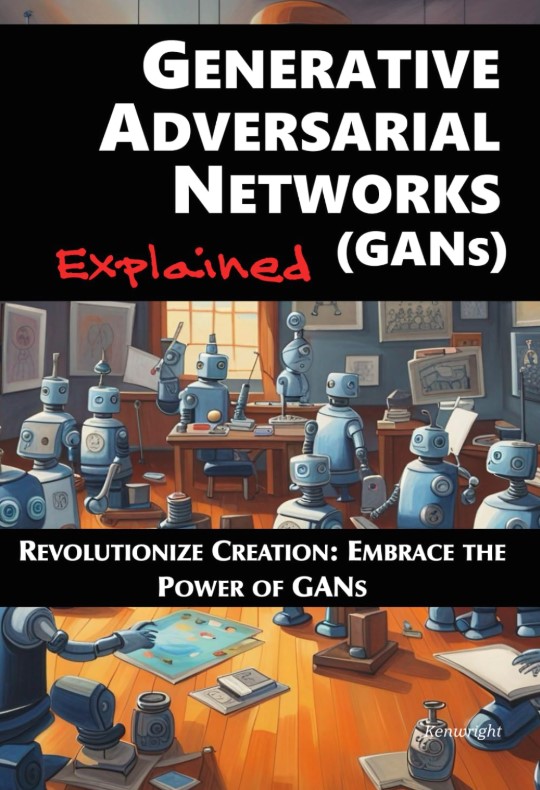
An enlightening journey into visualization, "Generative Adversarial Networks (GANs) Explained" explores its profound influence on the creative disruption. With clarity and enthusiasm, this essential read delivers fresh perspectives and actionable insights that inspire curiosity and spark meaningful progress.
Readers will find themselves motivated by the book’s clear explanations, thoughtful examples, and forward-thinking perspective. The author's passion for the subject shines through every chapter, offering readers a refreshing mix of technical rigor and creative inspiration. From foundational principles to advanced techniques, "Generative Adversarial Networks (GANs) Explained" delivers a well-rounded experience that caters to learners at every stage.
The balance between rigorous research and relatable anecdotes makes this book feel both credible and deeply personal.
The author's mastery of ai is evident throughout. Every chapter feels like a masterclass.
I felt like the author was guiding me personally. The tone was encouraging and the advice felt tailored to real challenges.
August 21, 2026I appreciated the way each chapter ended with reflection prompts—it encouraged me to apply what I learned right away.
August 20, 2026
This book is more than a read—it’s a catalyst for growth. I feel energized and equipped to take action.
This book didn’t just inform—it inspired me to rethink how I approach problem-solving in my own work.
September 2, 2026I appreciated the way each chapter ended with reflection prompts—it encouraged me to apply what I learned right away.
August 21, 2026Stay updated with the latest in tech literature
J.P. Donleavy, called Guts by his closest friends for his fighting spirit, refused rejection. The kid from the Bronx who knew how to box and eventuall...
Read MoreThings are tense this week, but it's hard to understand the stakes... The post “Starships are also capable of miracles” — <i>Star Trek: St...
Read MoreEnhance your reading and learning experience
Use a pointer or your finger to guide your eyes. This can increase reading speed by 25%.
Use the Feynman Technique: teach what you learn to someone else to identify knowledge gaps.
Organize books by color for visual appeal or by genre for practical access.
Rubber Duck Debugging: explain your code line by line to an inanimate object.
Create a dedicated reading space with good lighting and minimal distractions.
Take brief notes after each chapter. Summarizing helps cement knowledge.
Sarah Johnson
Professional ReviewerI was impressed by how seamlessly the book connected theory with practice. It felt like a roadmap I didn’t know I needed.
August 30, 2026